
In a discovery being hailed as one of the most significant biblical breakthroughs in decades, archaeologists believe they may have uncovered the remains of a first-century synagogue in Chorazin (Korazim), a site long associated with the ministry of Jesus. The find, made during a 2024 excavation at Korazim National Park in northern Israel, could provide the strongest physical evidence yet linking the ancient settlement to stories recorded in the New Testament.
The excavation team, led by archaeologist Achia Cohen-Tavor, had been re-examining the ruins of a fourth-century synagogue built around AD 380. While removing layers of stone beneath the structure’s floor, they uncovered massive basalt boulders deliberately arranged as a foundation, alongside fragments of pottery, coins, and cookware. These artifacts have been dated to the first century — the very period when the Gospels describe Jesus teaching, performing miracles, and healing the sick throughout Galilee.
“This is a groundbreaking discovery,” Cohen-Tavor said. “I have been excavating all over the world, and for me, it’s definitely one of the most important excavations I’ve ever directed.”
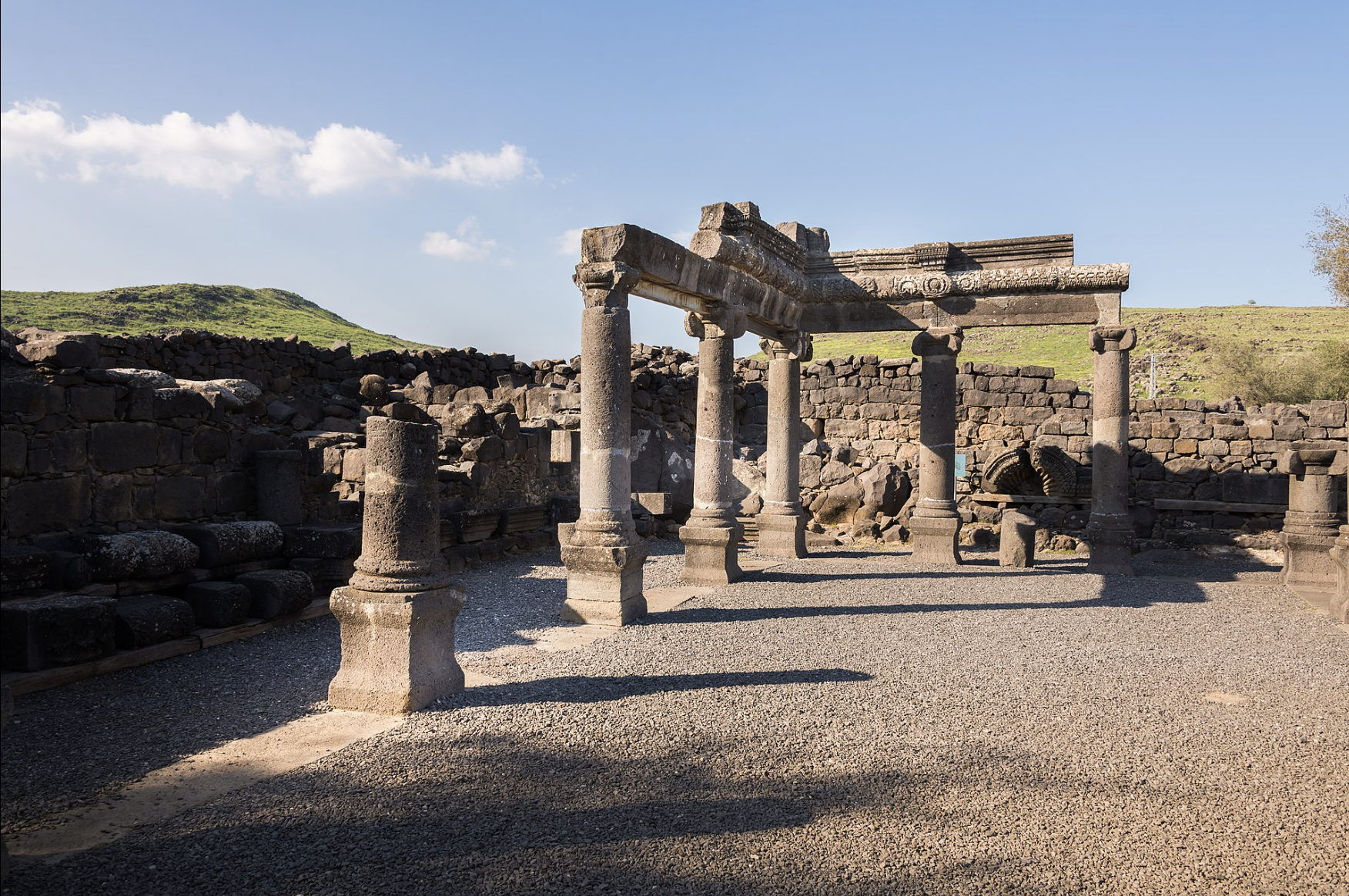
Ancient synagogue at Chorazin, from Wikipedia.

For centuries, scholars and pilgrims have associated Chorazin with accounts from the New Testament. According to the Gospels, Jesus preached in the local synagogue, healed the sick, and called the people to repentance. Yet despite these references, He later condemned the town for rejecting His message, famously declaring in the Book of Matthew: “Woe to you, Chorazin! Woe to you, Bethsaida!”
Until now, physical evidence of a first-century synagogue in Chorazin had been missing. If confirmed, this discovery could reveal the very place where Jesus delivered those teachings and performed miracles.
Archaeologists believe the ruins remained hidden for more than a century because the basalt foundation stones could easily have been mistaken for natural bedrock during earlier digs, particularly the 1905 excavation that first uncovered the fourth-century synagogue above it.
That later synagogue is already a landmark in biblical archaeology, renowned for its detailed carvings and Jewish motifs. Among its most notable finds is the “Chair of Moses”, a carved stone seat where Torah readers would sit while reciting scripture. This rare artifact is referenced in Matthew 23, where Jesus says: “The scribes and the Pharisees sit on Moses’ seat.”
Similar stone seats have been found at other ancient synagogues, including those at Hammath Tiberias and on the Greek island of Delos, reinforcing the historical accuracy of such details in scripture.
While the findings are extraordinary, Cohen-Tavor stresses caution. He notes that the newly discovered structure cannot yet be definitively identified as the synagogue mentioned in the Gospels. “What was found at the site are just clues about the first-century synagogue,” he explained. “Only continued study will confirm its connection to Jesus.”
Still, the evidence so far — including first-century artifacts, pottery, and coins found in situ — provides the strongest indication yet that Jewish worship was taking place in Chorazin during Jesus’ lifetime. If further analysis confirms the dating, this could represent a remarkable step forward in understanding the historical setting of the Gospel narratives.
This discovery not only sheds new light on Chorazin’s role in ancient Jewish life but also offers an unprecedented glimpse into the world where Jesus preached, taught, and performed miracles. As researchers continue their study, experts believe this could become one of the most important archaeological findings ever linked to the New Testament.