
READ: Scientists Turn Skin Cells Into Human Eggs — A Breakthrough With World-Changing Implications
In a discovery that could reshape the very foundations of human reproduction, researchers have successfully created human egg cells from skin cells. This first-of-its-kind achievement signals the possibility that, one day, babies could be born without the need for a biological mother.
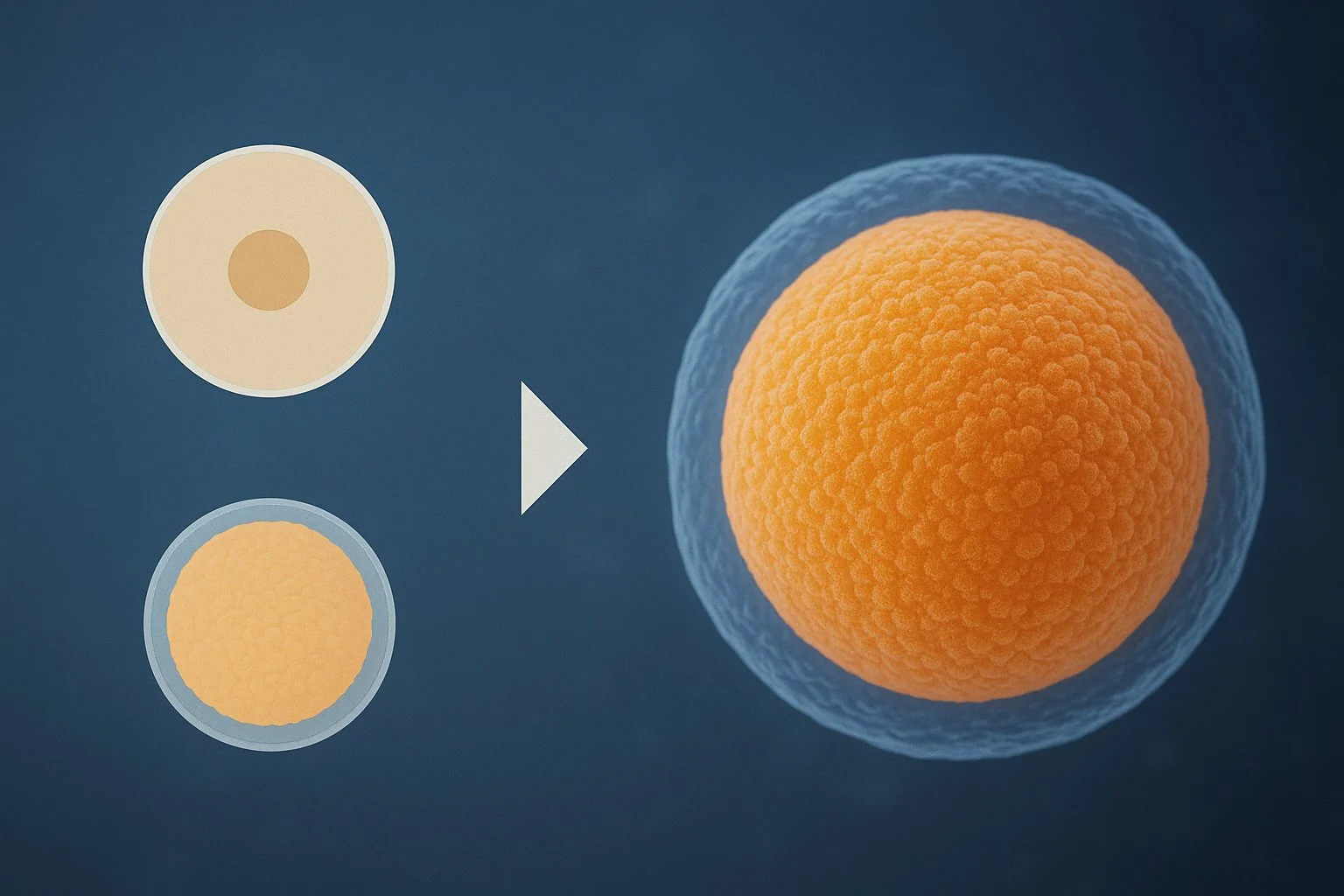
The process involves reprogramming DNA taken from skin cells and transforming it into egg-like cells. Crucially, these cells contain the correct number of chromosomes to be fertilized and potentially develop into embryos. While the technique remains in its earliest experimental stages, the research demonstrates that human eggs can, in principle, be generated entirely outside the body.
Professor Richard Anderson of the University of Edinburgh, who was not involved in the project, emphasized the importance of this advancement: “Many women are unable to have a family because they have lost their eggs, which can occur for a range of reasons including after cancer treatment. The ability to generate new eggs would be a major advance.”
For women facing infertility due to damaged or depleted eggs, this innovation could one day allow them to conceive children genetically related to them. Beyond that, the breakthrough also opens the possibility for same-sex male couples to have biological children without requiring a female egg donor, something that has never been possible before.
Professor Ying Cheong of the University of Southampton, also not connected to the study, noted: “While this is still very early laboratory work, in the future it could transform how we understand infertility and miscarriage, and perhaps one day open the door to creating egg- or sperm-like cells for those who have no other options.”
Although the science is promising, it carries profound ethical questions. If human eggs can be created without a woman’s body, what does this mean for the traditional roles of motherhood and family? The possibility of two men producing a child without female involvement challenges long-standing biological and cultural norms. It also raises concerns about reproductive technologies being used for non-medical reasons, such as genetic selection or reproductive independence entirely detached from natural biology.
Additionally, safety remains the most pressing scientific hurdle. Researchers stress that this technology is far from being ready for clinical use, and years of careful testing will be required to ensure that such lab-created eggs are safe and healthy for human development.
This breakthrough represents both hope and disruption. For millions struggling with infertility, it could provide a path to parenthood previously thought impossible. But it also forces society to grapple with the possibility of human reproduction moving beyond the traditional boundaries of mother and father.
The question is no longer just whether science can create life in new ways—but whether humanity is ready to accept the social, ethical, and moral changes that will follow.
